

April seemed to come and go at a rapid pace. Thankfully, when I reflect on the goings-on down the allotment, it was a very satisfying month – especially due to the fact it was a time of increased planting and sowing.
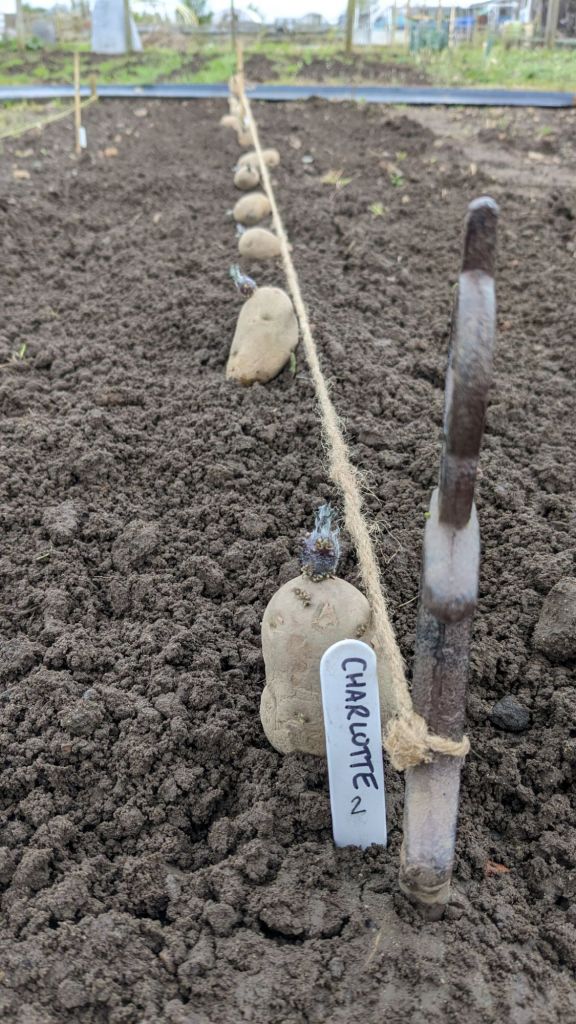
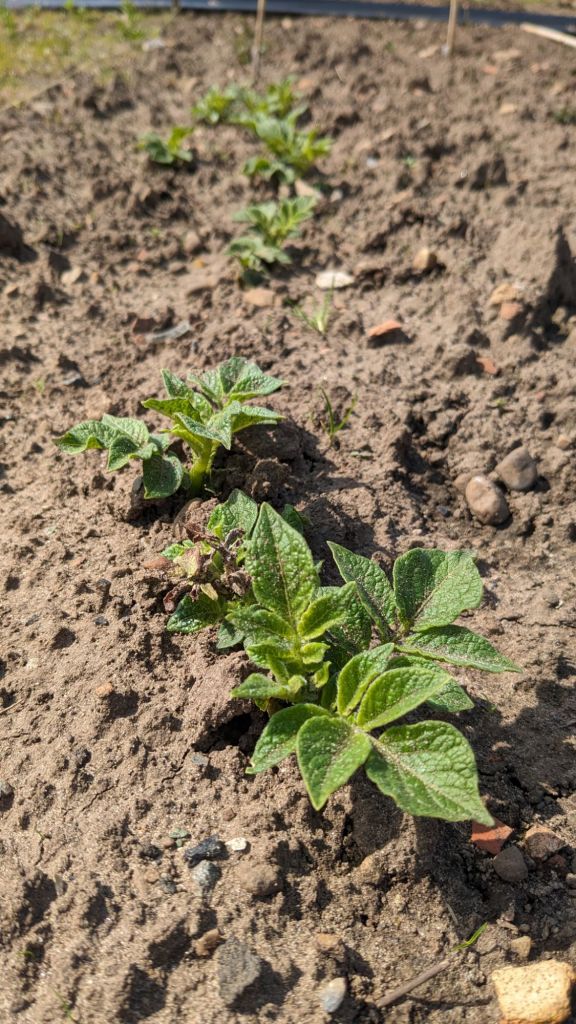
The first early potatoes went in at the end of March. Following in April were both the second early varieties of ‘Charlotte’ and ‘Estima’ and the maincrop ‘Pink Fir Apple’. At the end of the month, the first shoots of the first earlies were showing through the soil – which is great, but it will be best to earth them up quickly in case we get any more frosts. Overall, it means there are five different types of potatoes in total on the plot and that is going to be more than enough for us for the year.
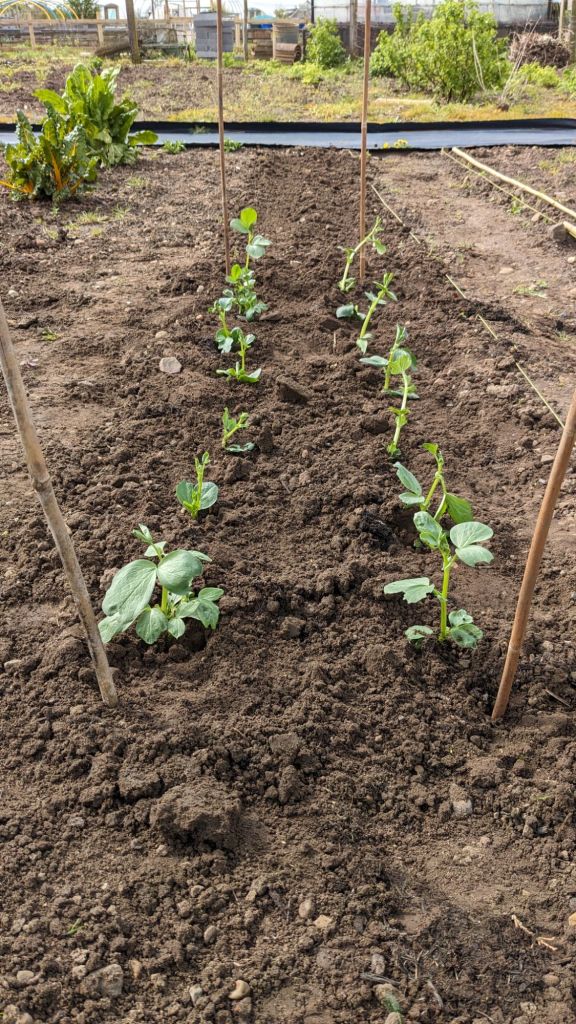
The other crop planted in April was broad beans. Unfortunately, I did not have great germination from the (admittedly old) broad bean seeds so I only ended up with a dozen or so to plant. Broad beans are always an enjoyable crop to grow, but I got the allotment too late last year to grow them. At least this year it means that, even though it may be a small one, at least I will get a broad bean harvest to enjoy.
A few other vegetables were directly sown into the soil in April. The first sowings of carrots, beetroots, and radishes were made in the middle of the month, and they will be followed by a few more successions so we get a nice long harvest.
I also planted some shallot bulbs that I had forgotten I had bought and sowed spring onions. These two crops are being planted alongside the roots as companion plants, fingers crossed it’ll mean the pungent scent of the alliums as they grow will keep the dreaded carrot fly away from my carrots and parsnips.
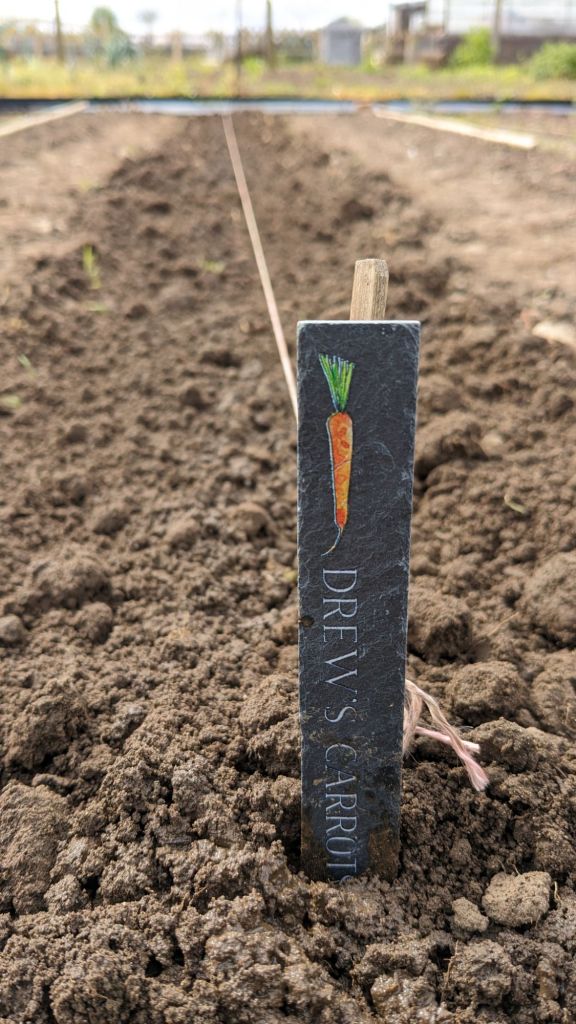
All in all, the allotment is getting a bit more organised now. I have marked out the beds and know what should be going in each space. It does look a little bit like an art project at the minute, with yellow string signifying the edges of growing beds and pink string marking where crops have been sown so far. Having everything marked out at this point just helps me keep aware of what has been sown and where the new paths are – which is useful as the overall design has slightly re-jigged from last year and it prevents me from getting confused (which can happen easily).
The cold frame at home is filling up with young vegetables and flowers destined for the allotment. In April I sowed leeks, runner beans, courgettes, peas, and four different varieties of tomatoes. I also planted french bean, pumpkin, and squash seeds that were saved from last year. The pumpkins and the squashes were great on the allotment in 2023, so we thought it would be fun to save the seeds to grow again. It is very cool to save seed from crops you have grown; not only does it save you a few quid, but you know the type and know it works well on your plot.
Finally, of course, there has been weeding to do. The warming temperatures of spring have meant the weeds have started growing. They are coming quickly and abundantly. You want to get on top of them early in the hope of avoiding being swamped with them later. In truth, there are weedy areas of the allotment that I do need to give a bit of time, but overall, it is not looking too bad.
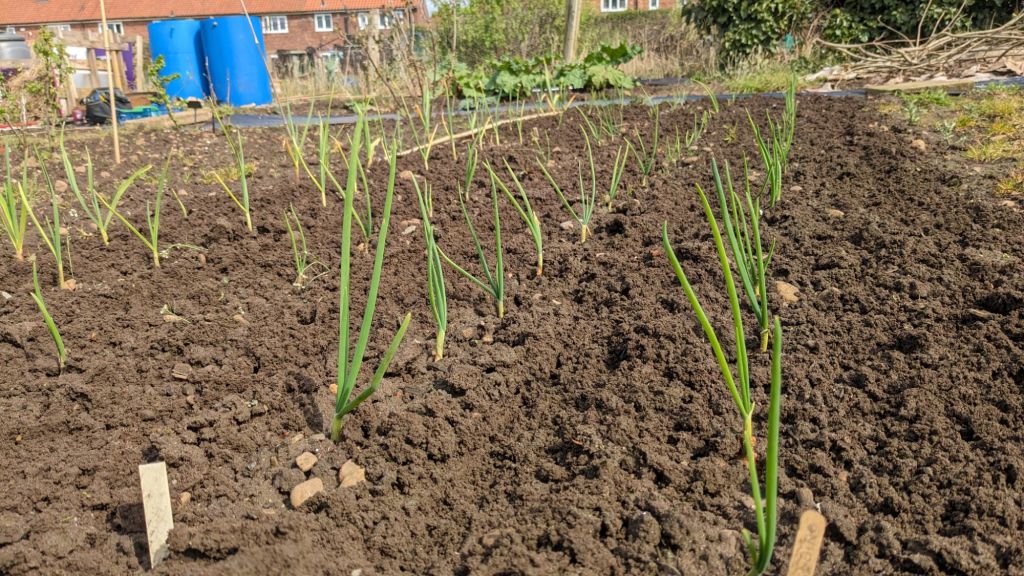
It is the promising signs that are very satisfying. The garlic and onions are growing strongly, the fruit bushes have put out leaves and are looking good, the newly planted rhubarb looks healthy, while most of the raspberry canes I added over winter are also starting to shoot now (there is one or two that are annoyingly not showing any signs of growth yet).
As the weather improves and the evenings are now lighter, it should mean more time to spend on the allotment. The to-do list does not get any smaller and in the next few weeks there will be a lot more to plant out. I have peas, cauliflower, Swiss chard, kale, cabbages, and more, waiting to plant once I am confident the frosts have ended.

 Perennial Nerd